
How to Find New Techno Music by Sound, Not Just Genre Tags
Genre tags show where a track is filed, not how it sounds. Start with one techno track you love and explore a ranked list of sonically related tracks.

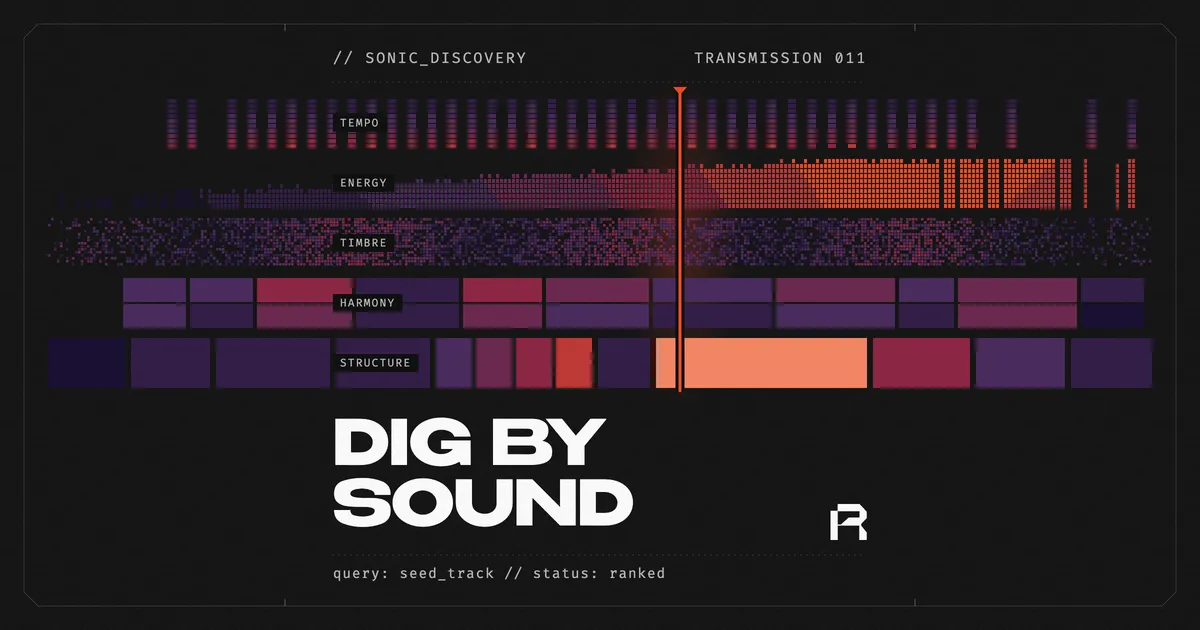
Quick answer: Genre tags tell you where a track is filed, not how it sounds. To find new techno music that fits your taste, start from a reference track you love and compare audio features such as tempo, energy, timbre, harmony and structure. Resomix's Sonic Discovery uses PYXIS-1 to analyse more than 70 measurable audio characteristics and returns a ranked list of sonically related tracks for you to audition.
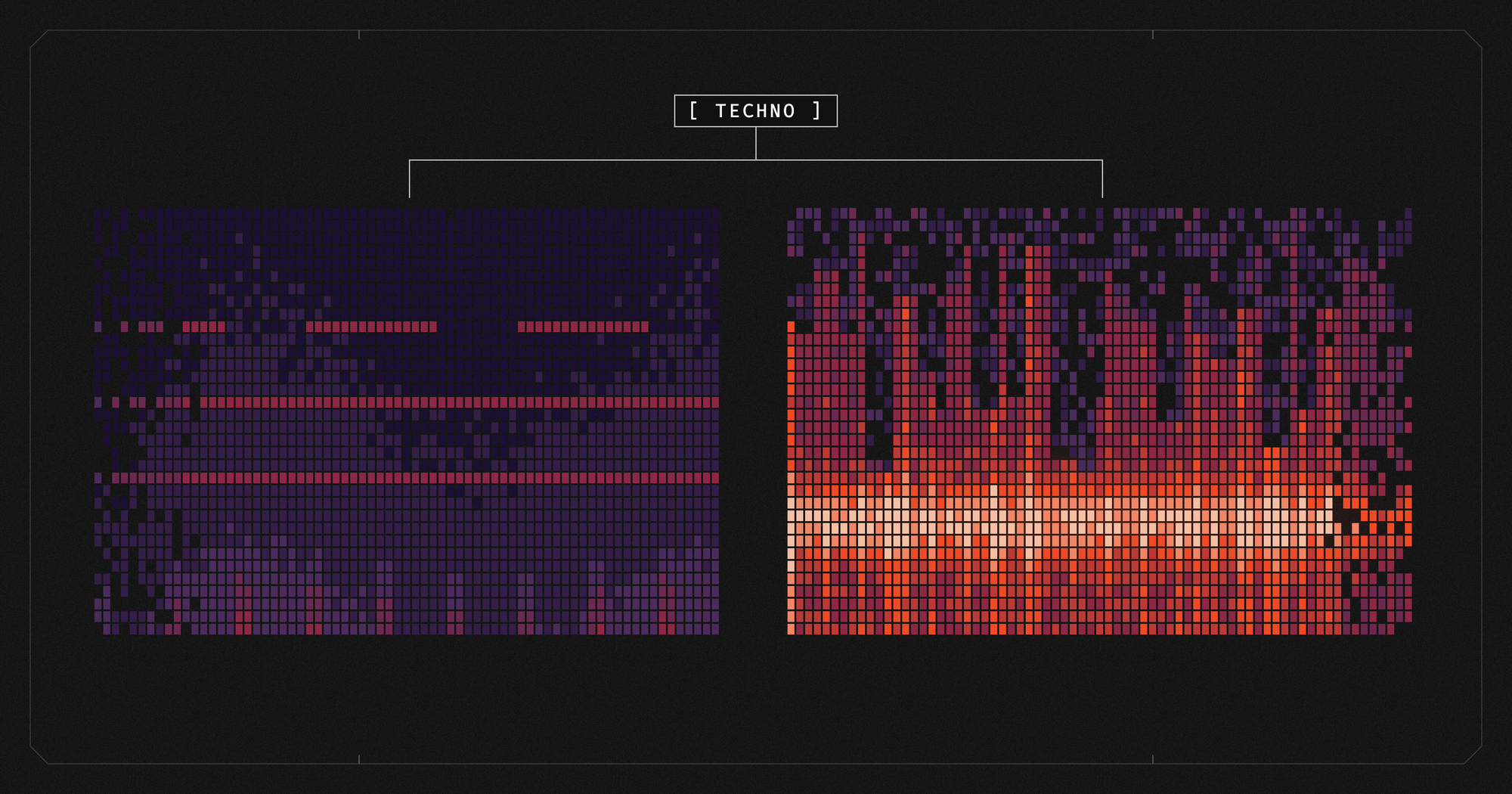
Two tracks can both be tagged "Techno" and share almost nothing else. One is hypnotic and stripped back, built for a 3am peak. The other is hard, metallic, and industrial enough to strip paint. Same label, different world.
That's the problem with finding techno through genre tags and playlists alone. Streaming platforms are good at telling you what a track is called and who else listened to it. That data describes the context around a track, though, not the sound itself.
If you're a techno DJ or a serious listener digging for the next track to sit beside the ones you already love, sound is a better starting point. Below are the audio features that shape how a techno track feels, and a simple method for using them to find similar techno tracks.
What Do Audio Features Tell You About a Techno Track?
Before you can search by sound, it helps to know what "sound" breaks down into. A handful of measurable characteristics do most of the work in defining how a techno track feels on the floor.
Tempo and BPM: Why a Few Beats Per Minute Change Everything
BPM sets the pace, and it sets the mood too. A track at 122 BPM can feel rolling and patient. Push the same rhythmic idea to 138 and it turns urgent, almost aggressive. In techno, a few BPM either way often marks the line between a warm-up groove and a peak-time weapon.
Energy: Peak-Time Intensity Versus Deep, Hypnotic Techno
Energy is intensity: how hard a track pushes, or how much it lets you sit in the groove. High-energy tracks are made for peak time. They drive forward and don't let up. Lower-energy tracks lean hypnotic, looping small variations over long stretches and rewarding patience more than adrenaline.
Timbre and Texture: The Character Behind the Rhythm
Timbre is the character of the sound itself: gritty or clean, metallic or warm, airy or dense. Two tracks at the same tempo and energy can still feel completely different because of texture alone. Texture is often what makes a track read as "industrial" or "dubby" before you've consciously noticed anything else about it.
Harmony and Key: Tonal Colour in Rhythm-Led Music
Techno is led by rhythm, but harmony still matters. Key and tonal colour shape whether a track feels cold and minor or warmer and more melodic, even when there's very little melody in it. Two tracks with near-identical rhythm can pull in different emotional directions, partly because of key.
Structure: How a Track Builds, Breaks and Returns
Structure is the shape of a track over time: how it builds tension, where it breaks down and how it drops back into the groove. A track built on long, patient builds behaves very differently in a set from one built around short, sharp drops.
How PYXIS-1 Reads These Features
PYXIS-1, the audio-analysis engine behind Resomix, analyses more than 70 measurable audio characteristics across rhythm, harmony, timbre, energy, spectral characteristics, and structure.
It helps to separate two kinds of information. Measured values, such as BPM, loudness and spectral detail, come straight from the audio. Classified labels, such as style or mood, are the system's best reading of that data and carry more uncertainty. Knowing which is which tells you how much weight to give each result.
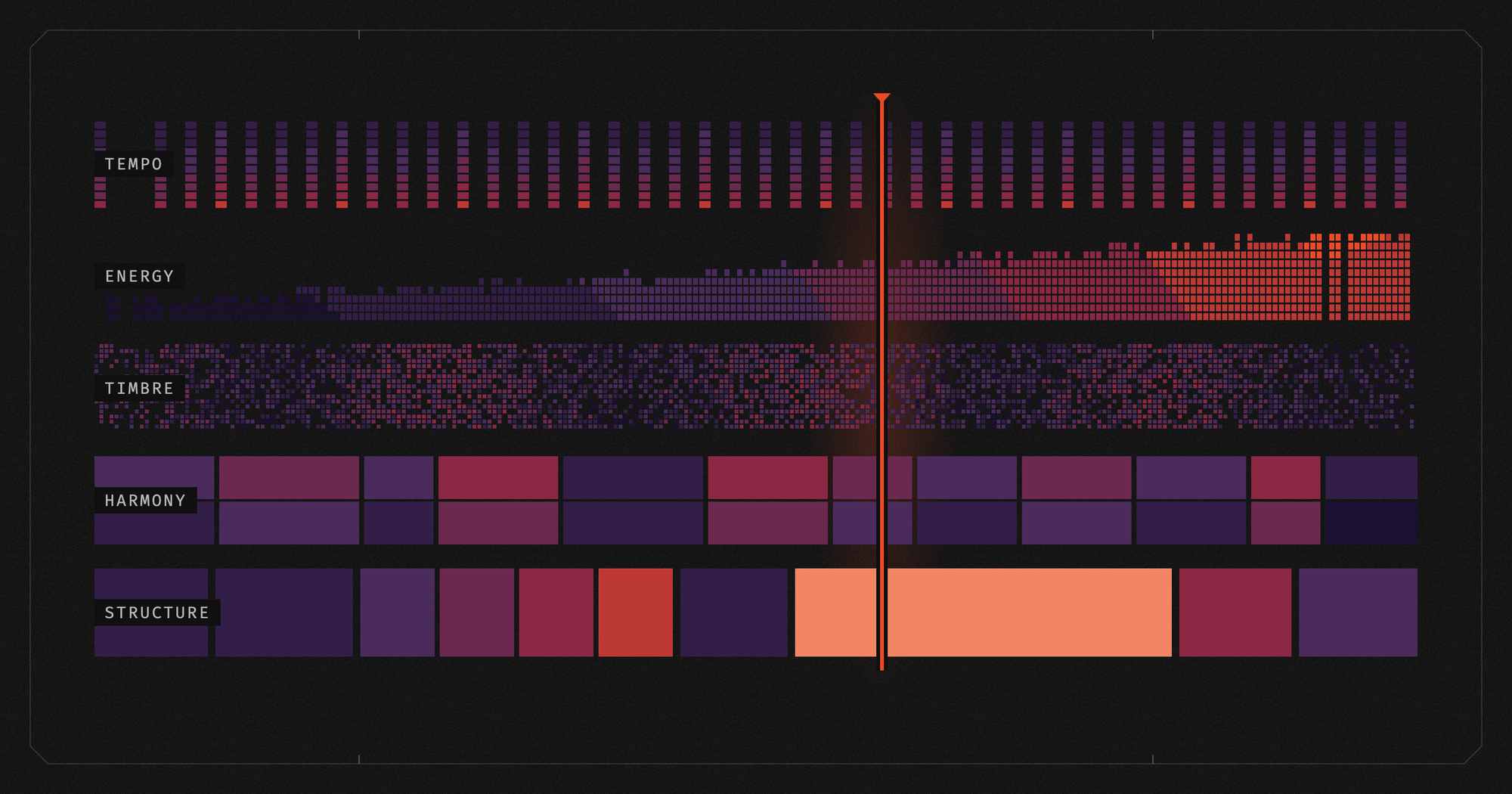
How Do You Find Similar Techno Tracks From One Seed Track?
Pick one track that captures exactly the sound you're chasing right now. It doesn't need to be a classic or a crowd favourite, just a track whose feel you want more of.
Use it as your reference in Resomix's Sonic Discovery. You can choose a track that's already in the index or upload a recording you have the right to use. Uploaded source audio is deleted no later than 24 hours after upload or analysis. PYXIS-1 builds the track's sonic profile, compares it with Resomix's pre-analysed index and returns a ranked list of sonically related tracks.
Then work through the list:
- Audition everything. Not every result will land, so keep what works for you and skip what doesn't.
- Trust your ears over the ranking. The list is a starting point, not a verdict, and you decide what earns a place in your library.
- Check the details before you mix. If you're a DJ, check BPM (usually the difference is 2-3 BPMs), key, and energy on any track before you build it into a set. Tracks that sound related won't automatically mix well together, because sonic similarity and mixing compatibility overlap without being the same thing.
A ranked shortlist narrows the field. It supports your judgement rather than replacing it.
Techno Discovery Habits That Work Alongside Audio-Based Search
Sound-based discovery works best as one part of a wider digging habit.
Follow labels and producers whose sound you already trust. A label's back catalogue is often a faster route to more of what you like than searching cold.
Save your finds into playlists organised by subgenre. Over time you'll see patterns in what you're drawn to that are easy to miss track by track.
Spend time in techno communities, forums and local scenes. Emerging sounds often come up there early, in conversations between people who live in the music.
None of these habits compete with audio-based discovery. Used together, they cover more ground than any one approach.
Start From One Track You Already Love
Genre labels tell you where a track sits on the shelf. Sound tells you what it does. Once you start from a reference track instead of a tag, you're searching by the sound itself.
Try it with one track today. Drop a reference into Sonic Discovery, work through the ranked list it returns and see what earns a place next to it. Resomix is in production beta, and the results are working super well. That means you get the right material based on your reference track, but you still make the call on your selection.
Frequently Asked Questions
What's the difference between finding techno by genre tag and by sound?
Genre tags group tracks by category and context, such as label history or listener behaviour. Audio-based discovery compares the sonic characteristics of one track (tempo, energy, timbre, harmony and structure) with those of other tracks. That's why it can surface tracks that have little in common on paper but sound closely related.
Do I need to understand audio engineering to use this method?
No. If you know what BPM, key and energy mean, you know enough. Sonic Discovery does the analysis. You choose a reference track and review what comes back.
Will similar-sounding techno tracks always mix well together?
Not necessarily. Sonic similarity and mix compatibility overlap, but they aren't the same. Always check BPM, key and energy yourself before you build tracks into a set.
Is Resomix finished or still in development?
Resomix is currently in production beta. You can use Sonic Discovery today while the product is still being developed.
What does PYXIS-1 analyse?
PYXIS-1 analyses more than 70 measurable audio characteristics across rhythm, harmony, timbre, energy, spectral characteristics, and structure. It turns each track into a sonic profile and compares that profile with Resomix's pre-analysed index. It's an analytical algorithm, not a trained AI model.

// MEMBER_DISCUSSION